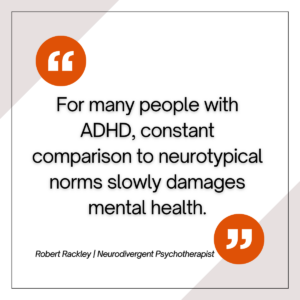
For many adults with ADHD and mental health difficulties don’t come from a lack of effort or care.
They come from too much pressure.
Pressure to keep up with neurotypical expectations.
Pressure to be consistent.
Pressure to perform, organise, plan, and cope in ways that don’t always fit an ADHD nervous system.
Over time, that pressure can quietly take a toll.
ADHD and the Weight of Expectations
Many people with ADHD spend years pushing themselves just to meet everyday demands. From the outside, things may look “fine,” but internally there can be chronic stress, anxiety, exhaustion, and self-criticism.
This often shows up as:
ongoing anxiety or burnout
feeling emotionally overwhelmed by small demands
difficulty resting without guilt
a sense of always being behind, no matter how hard you try
In therapy, it’s common to hear people describe feeling like they’re constantly failing — even when they’re doing far more than others realise.
Less Pressure Doesn’t Mean Giving Up
One of the biggest myths about ADHD is that reducing pressure means lowering standards or caring less.
In reality, the opposite is often true.
When pressure reduces:
the nervous system can settle
emotional regulation improves
capacity increases naturally
motivation becomes more sustainable
For many people with ADHD, mental health improves not through pushing harder, but through softening expectations and creating breathing space.
Why the Nervous System Matters
ADHD isn’t just about attention or focus. It’s closely linked to how the nervous system responds to stress.
Constant pressure keeps the body in survival mode — leading to hypervigilance, emotional reactivity, shutdown, or overwhelm. Over time, this can make everyday life feel unmanageable.
When pressure eases, even slightly, the nervous system can begin to regulate. This is often when clarity, energy, and self-compassion start to return.
A More Helpful Question
Instead of asking:
“Why can’t I cope like everyone else?”
A more ADHD-affirming question might be:
“What would help this feel more manageable for my brain?”
That shift alone can be protective for mental health.
A Therapeutic Reframe
Progress with ADHD rarely comes from force.
It more often comes from:
realistic expectations
flexible structures
reduced self-judgement
support before motivation
Less pressure doesn’t mean less ambition.It often means more capacity, better regulation, and steadier mental health.
Final Thought
If you’re living with ADHD and feeling anxious, burned out, or emotionally drained, it may not be because you’re doing too little.
It may be because you’ve been doing too much, for too long, under too much pressure.
Support matters. Understanding matters. And reducing pressure can be a powerful step toward better mental health.
If you’d like to learn more about ADHD-affirming therapy or my work, you can visit:
www.robertrackley.ie