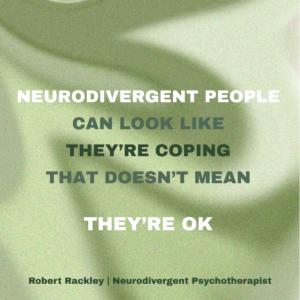
Many neurodivergent people look like they’re coping.
But that doesn’t mean they’re OK.
From the outside, everything can appear manageable. Someone may be working, studying, socialising, and getting through daily life.
But internally, the experience can be very different.
For many autistic individuals and people with ADHD, what looks like coping is often the result of constant effort.
The Hidden Work Behind “Coping”
Many neurodivergent people learn, often from a young age, to adapt to environments that don’t fully support how their brain works.
This can involve:
- masking differences in social situations
- pushing through overwhelm
- rehearsing conversations in advance
- hiding sensory discomfort
- continuing long after they feel exhausted
Over time, this becomes second nature.
To others, it may look like the person is coping well.
But underneath, it can feel like constant work just to keep up.
What Is Masking in Neurodivergence?
Masking refers to the process of hiding or suppressing natural behaviours in order to fit into social expectations.
This might include:
- forcing eye contact
- copying social behaviours
- suppressing stimming
- overthinking communication
- monitoring how one is perceived
Masking can be helpful in certain situations.
But when it becomes constant, it can take a significant toll on mental health.
The Cost of Constant Effort
One of the key features of neurodivergent experience is that many everyday tasks require more cognitive, emotional, and sensory effort.
This includes:
- social interaction
- decision-making
- task switching
- managing sensory environments
- regulating emotions
When this effort is sustained over time without adequate support, it can lead to:
- burnout
- anxiety
- shutdown or withdrawal
- loss of functioning
- reduced capacity for daily tasks
This is why someone can appear to be coping on the outside, while struggling internally.
Why This Is Often Missed
Neurodivergent experiences are often invisible.
People may only see:
- the outcome (work completed, attendance, functioning)
- not the effort required to achieve it
This can lead to misunderstandings such as:
- “They seem fine.”
- “They’re managing.”
- “They just need to keep going.”
But what isn’t visible is the cost of maintaining that level of functioning.
A Different Way of Understanding
When we understand neurodivergence more fully, we begin to look beyond appearances.
Instead of focusing only on whether someone is coping, we begin to consider:
- how much effort is involved
- whether it is sustainable
- what supports are needed
- how environments may need to change
This shift in understanding is essential for reducing burnout and supporting long-term wellbeing.
Working With a Specialist Neurodivergent Therapist
If you recognise yourself in this experience, you are not alone.
Many neurodivergent adults spend years appearing to cope while feeling overwhelmed internally.
Therapy can provide a space to:
- understand how your brain works
- explore the impact of masking
- reduce overwhelm
- build strategies that fit your natural thinking style
- develop a more sustainable way of living
In my work as a psychotherapist specialising in ADHD, autism, and neurodivergence, I support clients with:
- masking and burnout
- overwhelm and anxiety
- emotional regulation
- late diagnosis and identity
- navigating work, relationships, and daily life
Sessions are available in person in Limerick, as well as online for clients across Ireland and the UK.
If you would like to explore working together, you can book through my website:
Speaking, Training and Podcasts on Neurodivergence
I also provide talks, training, and workshops on neurodivergence, including:
- neurodivergent burnout
- masking and mental health
- ADHD and emotional regulation
- supporting neurodivergent individuals in therapy, education, and workplaces
If you are looking for a speaker or podcast guest on neurodivergence and mental health, you are welcome to get in touch.
About Robert Rackley
Robert Rackley MSc MIACP is a neurodivergent psychotherapist based in Limerick, Ireland. He specialises in ADHD, autism, and neurodivergent mental health.
He provides therapy, training, and talks focused on creating greater understanding and support for neurodivergent individuals.