Neurodivergence in the Therapy Room: Supporting ADHD and Autistic Clients in Therapy
As awareness of ADHD, autism, and neurodivergence continues to grow, more therapists are recognising the need to adapt traditional approaches to better support neurodivergent clients.
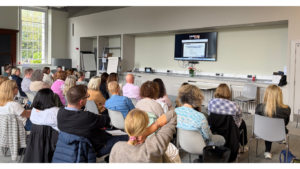
Recently, I had the opportunity to deliver training to staff from the HSE National Counselling Service on neurodivergence in the therapy room. What stood out most was not the presentation itself, but the thoughtful discussion that followed.
The questions reflected a genuine commitment to understanding neurodivergent experiences and improving therapeutic practice.
Many of the topics discussed are issues I encounter regularly in my work as a specialist neurodivergent psychotherapist.
Why Neurodivergence Is Often Missed in Therapy
Many ADHD and autistic adults seek therapy for:
- Anxiety
- Depression
- Burnout
- Low self-esteem
- Emotional regulation difficulties
- Relationship challenges
- Trauma
These concerns are often very real.
However, what may sit underneath them is an undiagnosed or unsupported neurodivergent experience.
Many neurodivergent adults become highly skilled at masking their difficulties. They learn to compensate, adapt, and hide their struggles.
From the outside they may appear successful, capable, and coping well.
Internally they may be experiencing chronic exhaustion, overwhelm, sensory overload, and self-criticism.
This can make ADHD and autism difficult to identify, even within therapy.
Adapting Therapy for Neurodivergent Clients
One of the strongest themes from the HSE discussion was the importance of adapting therapy rather than expecting clients to adapt to therapy.
Traditional therapeutic approaches often assume that clients can:
- Remember homework tasks
- Organise themselves between sessions
- Identify and describe emotions easily
- Tolerate sensory environments
- Process abstract language
- Move between tasks without difficulty
For many neurodivergent clients, these assumptions may not reflect their lived experience.
Small adaptations can significantly improve engagement.
Examples include:
Providing Greater Structure
Many ADHD and autistic clients benefit from:
- Session agendas
- Predictable formats
- Written summaries
- Clear goals
Structure can reduce anxiety and improve information retention.
Using Concrete Communication
Direct and specific language is often easier to process than abstract concepts.
Clarifying expectations and reducing ambiguity can help clients feel more confident and understood.
Supporting Executive Functioning
Executive functioning difficulties can affect:
- Planning
- Organisation
- Task initiation
- Working memory
- Prioritisation
What appears to be avoidance or resistance may actually be executive dysfunction.
Breaking goals into smaller, achievable steps can often be more effective than increasing motivation.
Considering Sensory Processing
The therapy environment itself can influence engagement.
Lighting, noise levels, seating arrangements, movement opportunities, and sensory distractions may all impact a client’s ability to participate fully.
ADHD, Trauma, and the Overlap Therapists Need to Understand
A significant discussion point during the training focused on the relationship between ADHD and trauma.
Many trauma responses can appear similar to ADHD symptoms:
- Difficulty concentrating
- Emotional dysregulation
- Hypervigilance
- Memory difficulties
- Impulsivity
- Anxiety
At the same time, many neurodivergent individuals have experienced significant adversity throughout their lives.
Repeated experiences of criticism, rejection, bullying, exclusion, misunderstanding, and failure can have a profound psychological impact.
Rather than asking whether a client has ADHD or trauma, therapists often need to understand how both experiences interact.
The Challenge of Accessing ADHD and Autism Diagnosis
Another topic that generated considerable discussion was the difficulty many adults experience when trying to access assessment and diagnosis.
Common barriers include:
- Long waiting lists
- Financial costs
- Limited local services
- Lack of awareness of adult presentations
- Misdiagnosis of mental health difficulties
For many adults, diagnosis is not about obtaining a label.
It is about finally understanding themselves.
Diagnosis can provide an explanation for experiences that previously felt confusing, inconsistent, or shameful.
Behaviour Is Communication
One of the most important concepts within neurodiversity-informed practice is recognising that behaviour communicates important information.
What appears to be:
- Resistance
- Avoidance
- Lack of motivation
- Emotional reactivity
- Disengagement
May actually reflect:
- Overwhelm
- Executive functioning difficulties
- Sensory overload
- Burnout
- Rejection sensitivity
When therapists become curious about what sits underneath behaviour, opportunities for understanding and growth increase significantly.
Moving Towards Neurodiversity-Affirming Therapy
Neurodiversity-informed therapy is not about lowering expectations.
It is about improving understanding.
When therapists understand masking, executive functioning, sensory processing, rejection sensitivity, burnout, and neurodivergent communication styles, therapy becomes more accessible and more effective.
The goal is not to make neurodivergent individuals appear more neurotypical.
The goal is to help people understand themselves, reduce shame, and develop strategies that work with their brain rather than against it.
Related Articles
- Understanding ADHD Burnout in Adults
- Why ADHD Is Often Missed in Therapy
- Rejection Sensitive Dysphoria (RSD): What Therapists Need to Know
- Autism and Mental Health: What Professionals Often Miss
- Executive Functioning Difficulties in ADHD
Neurodiversity Training for Therapists and Organisations
Robert Rackley MSc MIACP is a specialist neurodivergent psychotherapist, speaker, and trainer.
He delivers CPD-accredited training, workshops, keynote talks, and consultancy on ADHD, autism, and neurodiversity for healthcare services, therapists, educational settings, and workplaces throughout Ireland.
To enquire about training or speaking engagements:
Related Services
ADHD Therapy
https://robertrackley.ie/therapy-services/
Neurodiversity Training for Organisations
https://robertrackley.ie/events-talks/
Online ADHD Courses
https://robertrackley.ie/courses/
Contact Robert Rackley
https://robertrackley.ie/contact/