ADHD Shame in Adults: Why Symptoms Aren’t the Whole Story
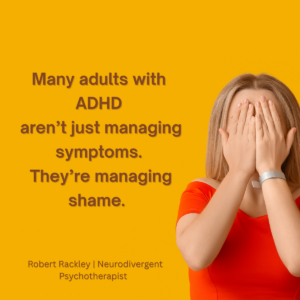
Many adults with ADHD aren’t just managing symptoms.
They’re managing shame.
While attention difficulties, overwhelm, and executive functioning challenges are often discussed, the emotional layer of ADHD is frequently overlooked — especially in adults diagnosed later in life.
In Ireland, increasing numbers of adults are receiving ADHD diagnoses in their 30s, 40s, and beyond. With that diagnosis often comes relief — but also years of internalised self-criticism.
How Shame Develops in Adults with ADHD
ADHD is a neurodevelopmental condition affecting attention regulation, emotional regulation, and executive functioning.
Shame develops when those differences are repeatedly misunderstood.
Many adults recall hearing:
“You’re not trying hard enough.”
“You’re careless.”
“You have so much potential.”
“Why can’t you just focus?”
Over time, these messages shape identity.
Instead of understanding neurological differences, many adults come to believe they are flawed, lazy, or inconsistent.
This internalised shame often persists long after diagnosis.
Why ADHD Shame Matters in Therapy
In therapy, unrecognised shame can:
Increase anxiety
Intensify burnout
Reduce self-trust
Create perfectionism
Lead to masking and overcompensation
When ADHD is recognised but shame is not addressed, therapy may focus only on coping strategies.
When shame is addressed, outcomes improve.
Clients often report:
Greater self-compassion
Reduced emotional reactivity
Increased engagement
Sustainable behavioural change
Reducing symptoms helps.
Reducing shame changes identity.
ADHD Masking and High Functioning Presentation
Many adults with ADHD appear “high functioning.”
They meet deadlines.
They perform well professionally.
They hold significant responsibility.
However, high functioning often means high effort.
Masking can include:
Over-preparing
Suppressing overwhelm
Rehearsing conversations
Avoiding vulnerability
Over time, this leads to exhaustion and burnout.
Understanding the shame layer helps explain why coping does not always equal wellbeing.
For Adults Seeking ADHD Therapy
Support that is neurodivergent-informed looks beyond productivity.
It considers:
Nervous system regulation
Identity reconstruction
Emotional processing
Internalised stigma
Sustainable pacing
If you are navigating adult ADHD and struggling with self-criticism, burnout, or overwhelm, therapy that understands both the neurological and emotional dimensions can be transformative.
I provide ADHD- and autism-informed psychotherapy for adults online across Ireland and internationally.
For Therapists & Counsellors: ADHD Training & CPD
For mental health professionals, recognising ADHD-related shame is essential to improving outcomes.
In my CPD-accredited ADHD training for therapists, we explore:
How adult ADHD is frequently missed in therapy
The impact of internalised shame on engagement
Adapting pacing and structure for neurodivergent clients
Differentiating trauma responses from executive dysfunction
Neurodiversity-informed therapeutic approaches
My ADHD CPD courses in Ireland are designed for counsellors, psychotherapists, and mental health professionals seeking practical, clinically grounded insight into adult ADHD.
You can learn more about my ADHD training and CPD programmes at:
Final Thoughts
Many adults with ADHD are not just managing distraction or organisation.
They are managing years of misunderstanding.
When therapy recognises both the neurological differences and the shame that developed around them, meaningful change becomes possible.