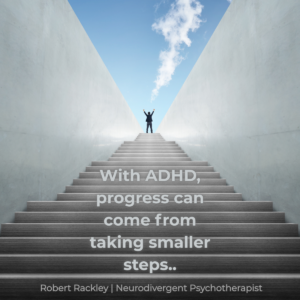
With ADHD Progress Can Come from Taking Smaller Steps
Progress is often imagined as something obvious and visible.
Big changes.
Clear milestones.
A sense of momentum that others can see.
For many adults with ADHD, progress doesn’t always look like that. And when it doesn’t, it’s easy to assume something isn’t working.
But with ADHD, progress can come from taking smaller steps.
When Big Changes Feel Out of Reach
Many people with ADHD are used to pushing themselves.
Trying harder.
Doing more.
Aiming for the kind of change that feels decisive and complete.
But when pressure builds, progress can actually slow down.
Overwhelm increases.
Motivation drops.
Burnout creeps in.
In those moments, the idea of “small steps” can feel underwhelming or even disappointing. Yet for many people, smaller steps are exactly what support movement forward.
What Smaller Steps Can Look Like
Progress with ADHD isn’t always about adding more. Often, it’s about reducing strain.
Smaller steps might look like:
doing a little less rather than trying to do everything
lowering expectations during high-stress periods
focusing on what feels manageable right now
stopping before exhaustion or burnout takes over
These changes may not feel dramatic, but they can be deeply meaningful.
They often create space for regulation, recovery, and steadier functioning.
ADHD Progress Isn’t Always Loud or Visible
One of the challenges for adults with ADHD is that progress can be quiet.
It might show up as:
feeling less overwhelmed at the end of the day
recovering more quickly after setbacks
having fewer shame spirals
being kinder to yourself when things don’t go to plan
These shifts don’t always show up on a to-do list or productivity tracker, but they matter.
They often indicate that something important is changing beneath the surface.
Mental Health and the Pace of Change
Mental health is closely linked to pace.
When expectations are too high or change feels rushed, anxiety and low mood can increase. When pressure eases, the nervous system often has more capacity to cope.
For many people with ADHD, mental health improves not when they push harder, but when they slow things down.
Smaller steps can:
reduce overwhelm
support emotional regulation
make daily life feel more sustainable
This isn’t about giving up on growth. It’s about choosing a pace that supports wellbeing.
Smaller Steps Still Move You Forward
It’s easy to underestimate small progress, especially in a culture that values speed and visible success.
But smaller steps still move you forward.
They can build confidence.
They can protect mental health.
They can make change more sustainable.
With ADHD, progress doesn’t have to be rushed or dramatic to be real.
A Gentler Way Forward
If you find yourself feeling “behind” or frustrated with how slow progress feels, it may be worth pausing rather than pushing.
ADHD progress often comes from:
working with your capacity, not against it
respecting limits rather than ignoring them
choosing steadiness over intensity
Small steps aren’t a compromise. For many people, they’re the most supportive way forward.
A Supportive Next Step
Many adults seek therapy not because they lack motivation, but because constant pressure to do more has taken a toll on their mental health.
ADHD-affirming psychotherapy can help explore pacing, reduce overwhelm, and support progress that feels realistic and sustainable.
You can learn more about my work and resources at:
www.robertrackley.ie