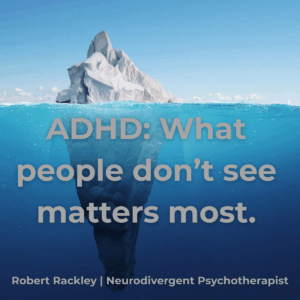
ADHD and the Invisible Load: The Hidden Work Behind Everyday Life
By Robert Rackley MSc MIACP — Neurodivergent Psychotherapist
Many adults with ADHD carry far more than people realise.
From the outside, it may look like small mistakes — missed details, late replies, forgotten tasks. But underneath those moments is something far more complex:
the invisible load.
This “invisible load” is the mental, emotional, and physical work ADHD adults do silently every single day. It’s real, exhausting, and rarely acknowledged.
Let’s take a closer look at what that load actually involves.
What People See vs. What ADHD Adults Carry
People often notice the outward slips:
the email you forgot
the message you didn’t respond to
the appointment missed by ten minutes
What they don’t see is the effort happening behind the scenes.
The invisible load can include:
1. Constant Mental Tracking
Trying to remember tasks, plans, deadlines, dates, and conversations — often all at once — without reliable working memory.
2. Emotional Regulation Work
Keeping calm during overstimulating moments, masking discomfort, or avoiding appearing “too much.”
3. Micro-Decisions All Day Long
Every task requires dozens of hidden steps. ADHD adults often plan, re-plan, and mentally rehearse simple actions just to get started.
4. Masking to Appear “Fine”
Many ADHD adults have spent years trying to seem organised, calm, and “together,” even when their nervous system is overwhelmed.
5. Overthinking and Anticipating Mistakes
The constant fear of forgetting something — again — creates anxiety that others never see.
6. Exhaustion from Holding Everything Together
ADHD isn’t low effort.
It’s too much effort, poured into survival tasks others do automatically.
Why the Invisible Load Feels So Heavy
ADHD affects executive functioning — the part of the brain responsible for planning, prioritising, organising, regulating emotion, and managing transitions.
When those systems work differently, everyday life becomes mentally expensive.
Tasks take more energy.
Emotions take more processing.
Change takes more effort.
Noise, stress, and pressure are harder on the nervous system.
This is why ADHD adults often feel exhausted, even when people around them think they “haven’t done much.”
You weren’t imagining it.
It is harder — and you’ve been working harder than anyone realises.
You’re Not Failing. You’re Overloaded.
Many ADHD adults carry deep shame because they assume they should be coping better.
But the truth is:
You’re tired because your brain is doing invisible work all day long.
Understanding the invisible load isn’t about creating excuses — it’s about creating compassion, clarity, and the right kind of support.
When ADHD adults finally see the load for what it is, something powerful happens:
shame decreases
self-understanding increases
overwhelm becomes easier to manage
and life starts to feel more navigable
That’s the beginning of real change.
If this resonates… you’re not alone
Many of my clients only discover the invisible load after learning about ADHD. Therapy then becomes a space to:
understand how your brain works
reduce shame you’ve carried for years
build tools that lighten the load
create routines that support your nervous system
stop masking and start living more authentically
If you’d like support in this area, you can explore my therapist-led ADHD resources and courses here:
👉 www.robertrackley.ie/courses