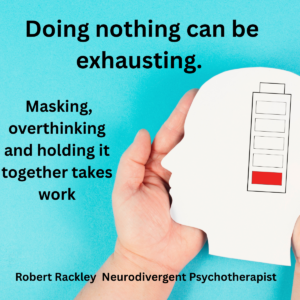
Doing Nothing Can Be Exhausting for People with ADHD
Many people with ADHD hear the same advice repeatedly:
“Just relax.”
“Take a break.”
“Do nothing for a while.”
But for many neurodivergent individuals, particularly those with ADHD, doing nothing is not restful at all.
In fact, it can feel deeply exhausting.
While someone may appear calm on the outside, their mind may still be working extremely hard behind the scenes.
The Hidden Effort of ADHD
ADHD is often misunderstood as simply being about attention or hyperactivity. But the reality is far more complex.
For many people with ADHD, daily life requires a constant level of mental effort that others may never see.
This can include:
• analysing social interactions
• replaying conversations
• overthinking decisions
• regulating emotions
• trying to stay organised
• masking behaviours that might be judged by others
Even when a person is physically resting, their mind may still be processing, analysing, and self-monitoring.
This is why rest does not always feel restorative.
Masking Takes Energy
One major reason doing nothing can feel exhausting is masking.
Masking occurs when a neurodivergent person suppresses natural behaviours or carefully adjusts how they present themselves in order to meet social expectations.
Someone with ADHD may spend much of the day:
• trying not to interrupt
• controlling impulsive responses
• forcing themselves to focus
• hiding emotional reactions
• monitoring their body language
These adjustments can happen constantly and often unconsciously.
By the end of the day, the brain has been working overtime simply to maintain control and appear “normal.”
The ADHD Mind Rarely Switches Off
Another challenge is that the ADHD brain can struggle to slow down.
Many people describe their mind as constantly active, even during moments that are meant to be restful.
Thoughts may jump rapidly between topics, revisit past conversations, or anticipate future situations.
This internal activity means that sitting still does not necessarily mean mental rest.
In fact, moments of inactivity can sometimes amplify racing thoughts.
Why Understanding This Matters
When people do not understand the internal effort required to manage ADHD, they may assume someone is simply not trying hard enough.
But the opposite is often true.
Many individuals with ADHD are already putting enormous effort into managing daily life.
Recognising the hidden mental work involved helps shift the conversation from criticism to understanding.
Instead of asking:
“Why can’t they just relax?”
We might begin asking:
“What kind of rest actually helps this person recover?”
What Rest Might Look Like for ADHD
True rest for ADHD does not always mean doing nothing.
For many people, restorative activities may include:
• movement such as walking or stretching
• creative outlets like drawing or music
• structured downtime with a clear activity
• time in low sensory environments
• engaging in hobbies that create focus and calm
The goal is not to force stillness, but to find forms of rest that work with the brain rather than against it.
A Different Perspective on Rest
When we recognise how much effort goes into managing ADHD, the idea that someone should simply “do nothing” becomes less helpful.
Sometimes the most supportive question we can ask is not:
“Why are you so tired?”
But instead:
“How hard has your mind been working today?”
Understanding this can transform how we support neurodivergent mental health.
About the Author
Robert Rackley MSc MIACP is a neurodivergent psychotherapist based in Limerick, Ireland. He specialises in working with autistic individuals and adults with ADHD, helping clients understand their neurodivergence and develop practical strategies to support their mental health.
Robert provides therapy, training, and neurodivergence education for professionals and organisations.
Learn more at:
https://robertrackley.ie